Trying to maintain some sense of normalcy in the middle of nothing normal means that I'm attempting blogging again. I like the idea of having a space to put my thoughts out where not everyone I know is seeing them. I like having a designated space to process my thoughts.
Today was a good day because I did not have any panic attacks. I felt more in control of things that I have since this whole thing started. Part of that was because we went over to my parent's house and spent some time outside with my dad. Part of that was seeing my mom in person, although from the designated six feet away while she stood in the doorway and the kids and I stood outside. You don't realize how much you miss what was once such an everyday thing.
This is hard. And I knew it would be, but I didn't know how hard. I didn't know how much my mood would fluctuate on a daily (hourly) basis. I didn't know how difficult it would be to keep focused on things other than work. To find things to do when I suddenly had all the time in the world and nowhere to be other than home.
On one hand, there's the push to be productive. To clean the whole house, to do all fo the things that I've been putting off since we moved (yes, there are still boxes that are unpacked over a year later). But on the other hand, I have to remember to give myself (and others) grace during this time.
It's funny to me that this entire process feels a lot like grieving. Grieving for what once was and what feels like it might never be again. I'm anxious for this all to be over, but terrified of what is to come. I don't know that I want to focus on what's outside this time and this house because it is so unpredictable. I used to feel that a certain amount of my life was in my control. If I behaved well enough or prayed hard enough then I would be able to make sense of it. Then my brother died and everything changed. I realized that I no longer had any control over anything and I never did. And that is what is terrifying about all of this. The thought that the normal we knew - that we could drive to the grocery store and buy milk and eggs; that I would wake up on a workday and go to work - is gone and never was all that normal.
So what does all of this mean? It means that I have to accept that I can't control things. I have to accept the mindset that I was reading about the other day of both, and. The idea that things don't have to be either/or but they can be both, and. Both terrifying and grounding. Both overwhelming and peaceful. Both happening so fast and happening so slowly. Not either/or but both, and. Not either I have control or things are awful. But that things can be both out of my control and okay. That the things I thought I knew as normal have to change. That I have to allow myself to be all of myself right now - vulnerable, anxious, terrified, overwhelmed, loving, frustrated, caring - both, and. And realize that God is always there in that and, even if it doesn't always feel like it.
Sunday, March 22, 2020

Sunday, September 29, 2013
My fall to do list
- bake pumpkin cookies (raisin for me, chocolate chip for Andrew)
- make crockpot applesauce
- make chili
- make corn chowder
- make a bunch of other recipes from my fall Pinterest board
- pass out candy to trick or treaters
- make a fire in our fire pit and make smores
- and possibly carve pumpkins

Image found here
Monday, August 12, 2013
Weekly Mantra 8/12
I think I'm going to try to come up with a mantra for each week, which should help keep me focused and motivated. Since this week is the first week of school my mantra for this week is:
CARPE THE HELL OUT OF THIS DIEM
Saturday, August 10, 2013
Wrapping up summer
This has been a good summer. I feel like I've accomplished a lot while also taking the time to relax and rest so that I'm ready (though I never feel ready) for a new school year. This summer I:
 |
| Image from here |
- taught four weeks of summer school
- lesson planned for the upcoming school year
- bought a birdfeeder for our backyard
- read a bunch of books
- finished the library reading program
- took a sign language class with Andrew
- knit two and a half prayer shawls
- took a week long vacation to Michigan with Andrew
- ate out at a few restaurants
- went to the Exotic Animal Rescue Center
- volunteered at the church rummage sale
- bought a hammock and a baker's rack from the rummage sale
- went to the Indianapolis Zoo
- went to the Indiana State Fair
It's been a good summer. This week I'm starting back to school so my goal is simply to get through the week with a positive attitude.
Wednesday, July 17, 2013
The Fault in Our Stars
I just finished reading The Fault in Our Stars by John Green. Oh my gosh. This is seriously the best book I've read in a long, long, long time. It's so good that I'm not even sure what to say about it except that you should go read it. Right now. Seriously.

Tuesday, June 25, 2013
Monday, June 3, 2013
Something to remember
"The Mighty One, God, the Lord,
speaks and summons the earth
from the rising of the sun to where it set." -Psalm 50:1
speaks and summons the earth
from the rising of the sun to where it set." -Psalm 50:1
Thursday, May 30, 2013
My First Memory (of Librarians)
My First Memory (of Librarians)
By Nikki Giovanni
This is my first memory:
A big room with heavy wooden tables that sat on a creaky
wood floor
A line of green shades—bankers’ lights—down the center
Heavy oak chairs that were too low or maybe I was simply
too short
For me to sit in and read
So my first book was always big
A big room with heavy wooden tables that sat on a creaky
wood floor
A line of green shades—bankers’ lights—down the center
Heavy oak chairs that were too low or maybe I was simply
too short
For me to sit in and read
So my first book was always big
In the foyer up four steps a semi-circle desk presided
To the left side the card catalogue
On the right newspapers draped over what looked like
a quilt rack
Magazines face out from the wall
To the left side the card catalogue
On the right newspapers draped over what looked like
a quilt rack
Magazines face out from the wall
The welcoming smile of my librarian
The anticipation in my heart
All those books—another world—just waiting
At my fingertips.
The anticipation in my heart
All those books—another world—just waiting
At my fingertips.
Wednesday, May 29, 2013
In the Library
In the Library
By William Stafford
You are reading a book, and think you know
the end, but others can’t wait—they crowd
on the shelves, breathing. You stop and look around.
It is the best time: evening is coming,
a bronze haze has captured the sun,
lights down the street come on.
the end, but others can’t wait—they crowd
on the shelves, breathing. You stop and look around.
It is the best time: evening is coming,
a bronze haze has captured the sun,
lights down the street come on.
You turn a page carefully. Over your shoulder
another day has watched what you do
and written it down in that book
you can’t read till all the pages are done.
another day has watched what you do
and written it down in that book
you can’t read till all the pages are done.
Tuesday, May 28, 2013
This made me think about pentecost in an entirely new way
"Babel was about everyone speaking one official imperial language. Pentecost is about the borderless God who speaks in every language."
— Brian Zahnd (@BrianZahnd) May 22, 2013
Monday, May 27, 2013
Something that made me think
“God is not a belief-system.
Jesus is not a religion.
Christianity is not a check-list.
Church is not an address.
The Bible is not a book of doctrines.
Community is not a meeting.
Grace has no exceptions.
Ministry is not a program.
Art is not carnal.
Women are not inferior.
Our humanity is not the enemy.
Sinner is not our identity.
Love is not a theory.
Peace is not a circumstance.
Science is not secular.
Sex is not filthy.
Life is not a warm-up for Heaven
The world is not without hope.
There is no “us” and “them.”
Tattoos are not evil.
Loving the earth is not satanic.
Seeing the divine in all things is not heretical.
Self-actualization is not self-worship.
Feelings are not dangerous and unreliable.
The mind is not infallible.”
Jim Palmer, Notes From (over) The Edge
Sunday, May 26, 2013
Blue Like Jazz
It's been a long time since I've read the book Blue Like Jazz by Donald Miller. I don't remember much about it, other than that I liked his other book Through Painted Deserts more than I liked Blue Like Jazz.
 This weekend, I was looking through the new releases on Netflix looking for something to watch when I ran across the movie Blue Like Jazz. I'm not really sure what I think about it. I don't know if I would have kept watching if I hadn't known that the author helped make the movie. The movie didn't follow the book, but was written as a type of interpretation of the book because people didn't think that the book would make an interesting enough movie. I know that they wanted to make a movie that was not the typical Christian movie, but it felt like they were trying too hard to go the other way.
I read an article about the movie that seemed to explain my feelings about the movie pretty well when it said,
Every once in a while, I felt like the tone of the book came through, but not very often. And, honestly, I'd have to reread the book to be sure, which I'm planning on doing because I want to be reminded of why I liked the book even if I hated the movie.
This weekend, I was looking through the new releases on Netflix looking for something to watch when I ran across the movie Blue Like Jazz. I'm not really sure what I think about it. I don't know if I would have kept watching if I hadn't known that the author helped make the movie. The movie didn't follow the book, but was written as a type of interpretation of the book because people didn't think that the book would make an interesting enough movie. I know that they wanted to make a movie that was not the typical Christian movie, but it felt like they were trying too hard to go the other way.I read an article about the movie that seemed to explain my feelings about the movie pretty well when it said,
But more importantly, in a movie that's supposed to depict an authentic walk of faith, it just doesn't feel real. From what I've witnessed—in the Bible, in my own life, and in the lives of those around me—an encounter with God elicits a desire to share the good news, not to say sorry for it. This is something Miller himself seems to understand, or at least he did, at one point. Blue Like Jazz the book does not end with an apology. It ends with an exhortation. "I want you to know Jesus too," Miller writes. That's what knowing Jesus does—it makes you want other people to know him, as well. It's a truth as old as the Bible itself, but it's entirely absent from Blue Like Jazz the movie. Instead of "I want you to know Jesus," we hear, "I want you to apologize for Jesus." It's a message that Hollywood itself could have delivered.
Every once in a while, I felt like the tone of the book came through, but not very often. And, honestly, I'd have to reread the book to be sure, which I'm planning on doing because I want to be reminded of why I liked the book even if I hated the movie.
Wednesday, April 17, 2013
On being left out
Today I was left out of lunch plans by the teachers. It still hurts just as much as it always has to be left out.
Sunday, April 14, 2013
National Poetry Month: Mary Oliver
There's something about gardens outside of hospitals that brings a sense of peace to the sterile environment you find inside. This poem captures that feeling.
University Hospital, Boston By Mary Oliver
| Image from here |
The trees on the hospital lawn
are lush and thriving. They too
are getting the best of care,
like you, and the anonymous many,
in the clean rooms high above this city,
where day and night the doctors keep
arriving, where intricate machines
chart with cool devotion
the murmur of the blood,
the slow patching-up of bone,
the despair of the mind.
When I come to visit and we walk out
into the light of a summer day,
we sit under the trees —
buckeyes, a sycamore, and one
black walnut brooding
high over a hedge of lilacs
as old as the red-brick building
behind them, the original
hospital built before the Civil War.
into the light of a summer day,
we sit under the trees —
buckeyes, a sycamore, and one
black walnut brooding
high over a hedge of lilacs
as old as the red-brick building
behind them, the original
hospital built before the Civil War.
We sit on the lawn together, holding hands
while you tell me: you are better.
How many young men, I wonder,
came here, wheeled on cots off the slow trains
from the red and hideous battlefields
to lie all summer in the small and stuffy chambers
while doctors did what they could, longing
for tools still unimagined, medicines still unfound,
wisdoms still unguessed at, and how many died
staring at the leaves of the trees, blind
to the terrible effort around them to keep them alive?
I look into your eyes
which are sometimes green and sometimes gray,
and sometimes full of humor, but often not,
and tell myself, you are better,
because my life without you would be
a place of parched and broken trees.
Later walking the corridors down to the street,
I turn and step inside an empty room.
Yesterday someone was here with a gasping face.
Now the bed is made all new,
the machines have been rolled away. The silence
continues, deep and neutral,
as I stand there, loving you.
Saturday, April 13, 2013
National Poetry Month: Elizabeth Bishop (again)
When I was in college, I took a poetry class with an amazing professor who challenged me to write in different styles. One of those was to write a sestina which is incredibly hard because you have to keep repeating the same words but in different orders. This poem puts such great images in my mind, especially that of the Little Marvel Stove. When I was little, my grandmother had a little toy stove that we used to play with all of the time and this poem always makes me think of that stove.
SestinaBy Elizabeth Bishop
| Image from here |

September rain falls on the house.
In the failing light, the old grandmother
sits in the kitchen with the child
beside the Little Marvel Stove,
reading the jokes from the almanac,
laughing and talking to hide her tears.
She thinks that her equinoctial tears
and the rain that beats on the roof of the house
were both foretold by the almanac,
but only known to a grandmother.
The iron kettle sings on the stove.
She cuts some bread and says to the child,
It's time for tea now; but the child
is watching the teakettle's small hard tears
dance like mad on the hot black stove,
the way the rain must dance on the house.
Tidying up, the old grandmother
hangs up the clever almanac
on its string. Birdlike, the almanac
hovers half open above the child,
hovers above the old grandmother
and her teacup full of dark brown tears.
She shivers and says she thinks the house
feels chilly, and puts more wood in the stove.
It was to be, says the Marvel Stove.
I know what I know, says the almanac.
With crayons the child draws a rigid house
and a winding pathway. Then the child
puts in a man with buttons like tears
and shows it proudly to the grandmother.
But secretly, while the grandmother
busies herself about the stove,
the little moons fall down like tears
from between the pages of the almanac
into the flower bed the child
has carefully placed in the front of the house.
Time to plant tears, says the almanac.
The grandmother sings to the marvelous stove
and the child draws another inscrutable house.
Friday, April 12, 2013
National Poetry Month: Marge Piercy
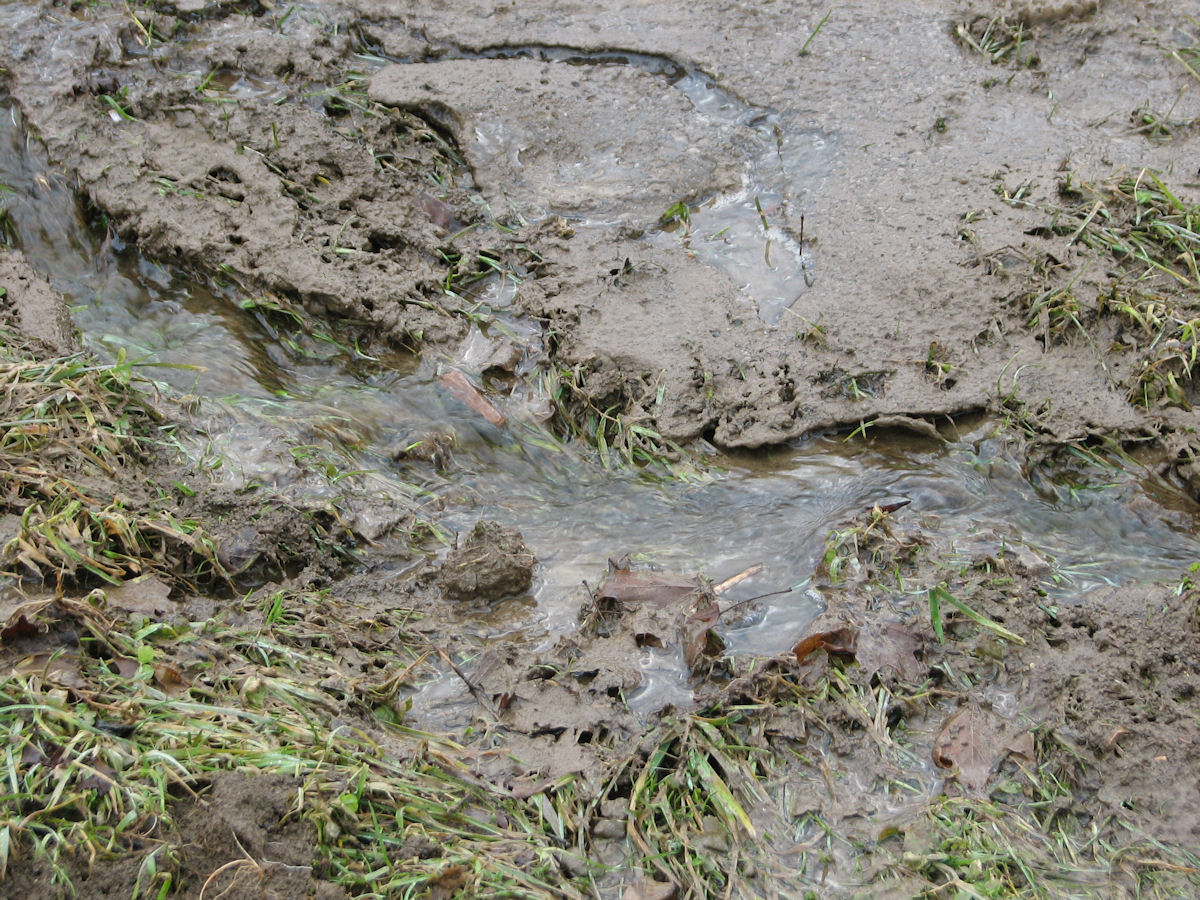
My favorite line in this poem is "The work of the world is as common as mud." This poem makes it clear that even though work is common, it's something that must be done and something that people long for because they are proud of the end results.
 |
| Image from here |

To Be of Use
By Marge Piercy
The people I love the best
jump into work head first
without dallying in the shallows
and swim off with sure strokes almost out of sight.
They seem to become natives of that element,
the black sleek heads of seals
bouncing like half-submerged balls.
I love people who harness themselves, an ox to a heavy cart,
who pull like water buffalo, with massive patience,
who strain in the mud and the muck to move things forward,
who do what has to be done, again and again.
I want to be with people who submerge
in the task, who go into the fields to harvest
and work in a row and pass the bags along,
who are not parlor generals and field deserters
but move in a common rhythm
when the food must come in or the fire be put out.
The work of the world is common as mud.
Botched, it smears the hands, crumbles to dust.
But the thing worth doing well done
has a shape that satisfies, clean and evident.
Greek amphoras for wine or oil,
Hopi vases that held corn, are put in museums
but you know they were made to be used.
The pitcher cries for water to carry
and a person for work that is real.
Thursday, April 11, 2013
National Poetry Month: Rabindranath Tagore
This poem brings a simplicity that is sometimes overlooked to my relationship with God. By repeating the image of being face to face with God, it takes away everything else and lets me focus on the importance of my relationship with him.
Face To FaceBy Rabindranath Tagore
Day after day, O lord of my life,
shall I stand before thee face to face.
With folded hands, O lord of all worlds,
shall I stand before thee face to face.
Under thy great sky in solitude and silence,
with humble heart shall I stand before thee face to face.
In this laborious world of thine, tumultuous with toil
and with struggle, among hurrying crowds
shall I stand before thee face to face.
And when my work shall be done in this world,
O King of kings, alone and speechless
shall I stand before thee face to face.
shall I stand before thee face to face.
With folded hands, O lord of all worlds,
shall I stand before thee face to face.
Under thy great sky in solitude and silence,
with humble heart shall I stand before thee face to face.
In this laborious world of thine, tumultuous with toil
and with struggle, among hurrying crowds
shall I stand before thee face to face.
And when my work shall be done in this world,
O King of kings, alone and speechless
shall I stand before thee face to face.
Wednesday, April 10, 2013
National Poetry Month: Elizabeth Bishop
I really like the way this poem talks about the conversations that are almost always in my head. I especially like her use of the word "uninnocent" because it captures the way I seem to think about things I know that I shouldn't dwell on but am unable to stop myself from thinking about.
ConversationBy Elizabeth Bishop
The tumult in the heart
keeps asking questions.
And then it stops and undertakes to answer
in the same tone of voice.
No one could tell the difference.
Uninnocent, these conversations start,
and then engage the senses,
only half-meaning to.
And then there is no choice,
and then there is no sense;
until a name
and all its connotation are the same.
Tuesday, April 9, 2013
National Poetry Month: WIlliam Butler Yeats
I like the emphasis that this poem gives to reflecting on all of the experiences we've had in life, even if they didn't turn out how we would have liked them to. I definitely need the reminder to take the time to look back and reflect instead of constantly looking to the future.
When You Are OldBy William Butler Yeats
When you are old and grey and full of sleep,
And nodding by the fire, take down this book,
And slowly read, and dream of the soft look
Your eyes had once, and of their shadows deep;
How many loved your moments of glad grace,
And loved your beauty with love false or true,
But one man loved the pilgrim Soul in you,
And loved the sorrows of your changing face;
And bending down beside the glowing bars,
Murmur, a little sadly, how Love fled
And paced upon the mountains overhead
And hid his face amid a crowd of stars.
Monday, April 8, 2013
National Poetry Month: Matsuo Basho
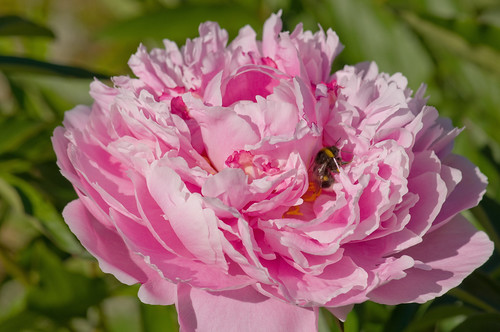
There's something great about short poems because they are so simple, but can say so much. I especially like the image that this poem gives of the bee staggering because he's so overcome with pollen or the scent of the peony or both. It seems appropriate for my first day back to school from spring break since I'm sure to be staggering a bit by the end of it!
A Bee
By Matsuo Basho
A bee
staggers out
of the peony.
 |
| Image from here |
A Bee
By Matsuo Basho
A bee
staggers out
of the peony.
Subscribe to:
Posts (Atom)